

Why most coalitions feel stuck in neutral (and the key to shifting gears)
For the last few months, we’ve been talking about how public health isn’t actually a systems business. It’s a people business.
For the last few months, we’ve been talking about how public health isn’t actually a systems business. It’s a people business.
If you missed our series on this, or are just joining us (welcome!), definitely circle back and check it out. We talked about why I think public health is a people business (despite being a HUGE believer in systems change), the one thing it all comes down to, why you need champions, the biggest threat to sustaining your coalition’s work, and why the key to your coalition’s success is to be human (yes, even in - especially in - a world obsessed with AI).
Health coalitions and other partnerships are a prime example of public health as a people business. Yes, our aim is to change systems (not people), but to get to systems change, we have to inspire, coordinate, and mobilize our coalition and community members to act, and we have to listen to and learn from them along the way.
If you’ve ever felt STUCK in neutral in your coalition - stuck in the “ sit and meet with people” phase, stuck in the “let’s do another needs assessment” phase, stuck in the “we have a strategic plan but it’s sitting on a shelf phase” - then the key to shifting gears has to do with building a foundation that recognizes this PEOPLE component of the work.
Who you have at the table, how you listen to and co-create with them, how you inspire them, how you decide what to do together, how you build their capacity - all of this matters deeply.
Without it, you lack engagement, you lose momentum, you remain stuck in neutral.
With it, you build the foundation you need to shift gears and get to meaningful action and lasting impact.
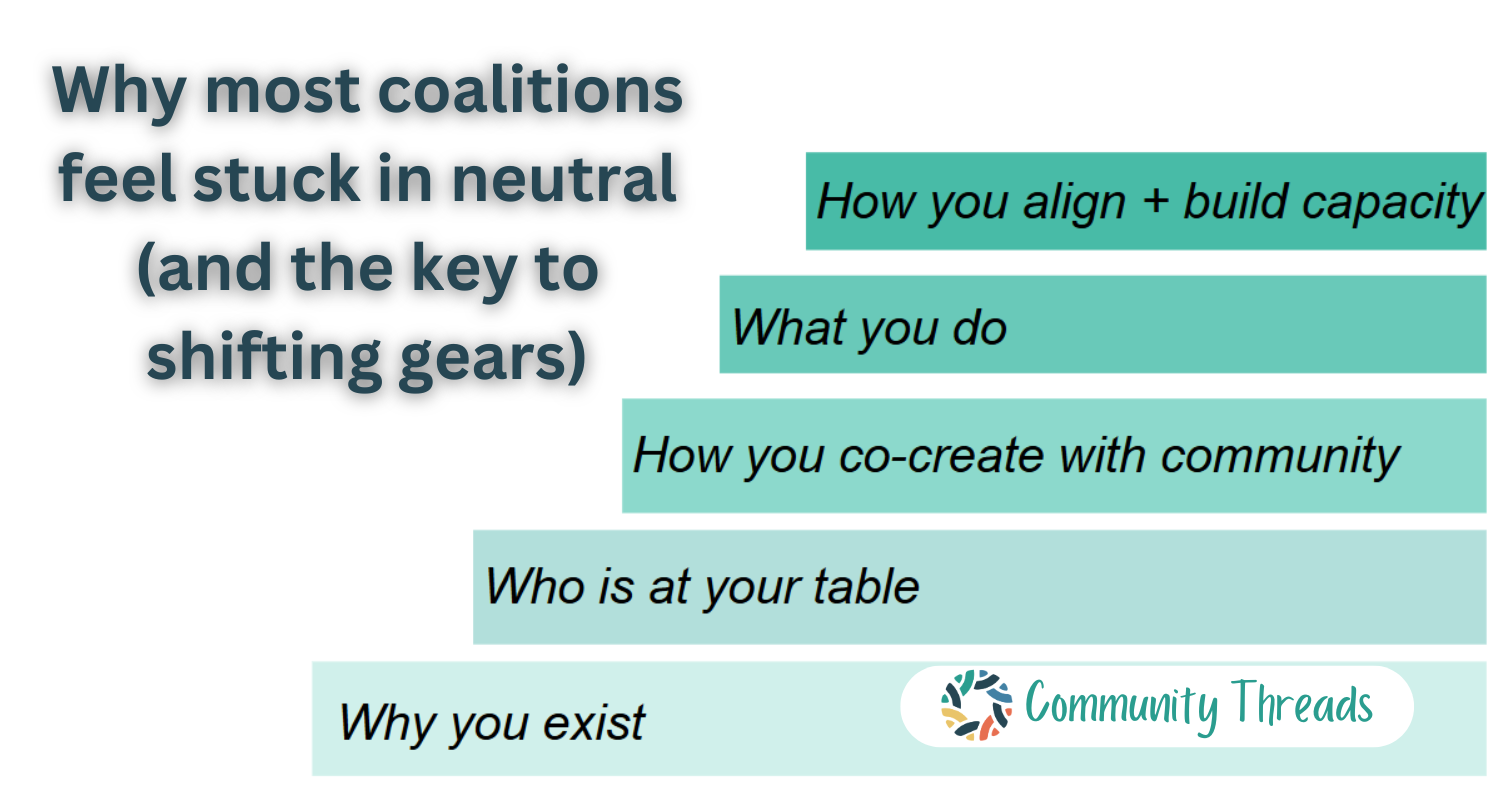
I recently gave a talk at the National Network of Public Health Institutes conference where I shared the steps involved in this foundation. We call it the Coalition Core 5 and it’s the difference between a coalition feeling stuck and feeling like a superhero, between admiring the problem and solving it, between feeling stalled and having real momentum and impact.
Here are the five steps:
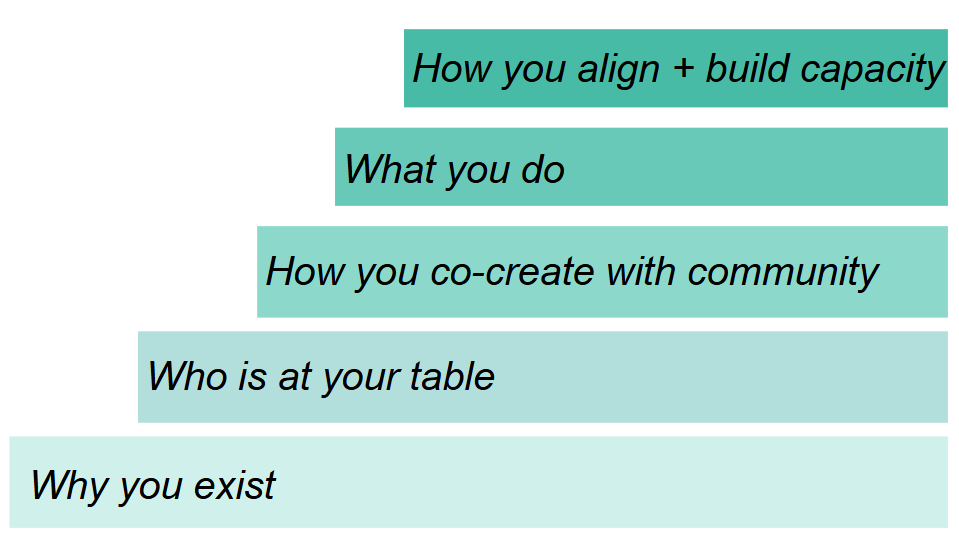
Over the next several issues, we’ll unpack each of these steps, sharing how we’ve helped our partners use them to shift from neutral into high gear.
But first, I’d love to hear your initial reaction. Which of these steps sounds most promising to you in terms of unlocking greater engagement and impact in your coalition? Drop me a note and let me know!
***
P.S. Sometimes it helps to just say the challenges out loud. If you're looking for a fresh perspective on what’s next for your health coalition, you can find my calendar here.
And if you're looking to share this newsletter with another coalition member or colleague, here's the link to subscribe.
***
Sign up to receive future newsletters directly in your inbox at www.pophealthllc.com/newsletter.
In a world of bots, be a HUMAN - it’s key to your coalition’s success
As we’re highlighting through this series, public health is, at its core, a people business.
So, naturally, one key piece of advice for health coalition leaders to keep in mind: Be a human.
In an era of artificial intelligence and soulless corporations, there’s something to be said for simply being human.
As we’re highlighting through this series, public health is, at its core, a people business.
So, naturally, one key piece of advice for health coalition leaders to keep in mind: Be a human.
In an era of artificial intelligence and soulless corporations, there’s something to be said for simply being human.
And even for those of us who are devoted to transforming health and well-being in our communities, it’s easy to lose sight of the ways in which being human makes our work stronger.
So we’re going to shine a light on a few of those ways. Here’s how you can lead with your humanity:
1. Lead with YOUR story.
Don’t just embrace your humanity, lead with it. Get personal.
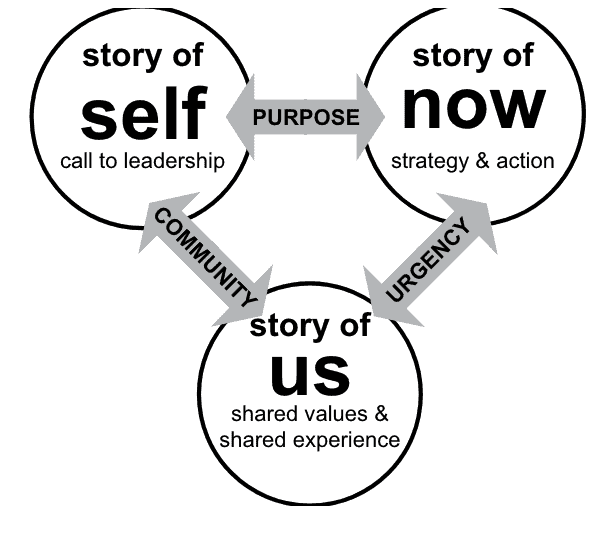
We love Marshall Ganz’s Public Narrative framework (ever since I first learned this from him in a grad school class, it completely reshaped the way I approach storytelling).
Instead of a dry bio, frame your communication through three lenses:
The Story of Self: Why are you called to this work? What specific experiences shaped your values?
The Story of Us: What shared values and experiences connect your coalition members? Your community members?
The Story of Now: What is the urgent challenge we face, and what is the specific path forward?
2. Embrace JOY.
Yes, things are heavy in the world and in our country right now. Yes, public health has been attacked right and left. And yet - we cannot forget the human desire for JOY.
If your coalition meetings feel like a chore, people will eventually stop showing up. Find ways to infuse delight into the process - a funny icebreaker, a celebration of small wins, space for connection. If people are having fun, they’ll stay in the fight - and so will you.
3. APOLOGIZE.
We are human. We’re going to make mistakes. In a professional world that sees admitting fault as a liability, be the person who owns it.
When you make a mistake, acknowledge it. Apologize. Rewind and/or repair. When you fail to acknowledge a mistake, you lose credibility. When you own it and take action to make things better, you gain trust.
4. Prioritize COMMUNITY.
“Community is the medicine.” Every single line of this convocation speech Lily Singh gave is so on point. She says: “Everything is better when it happens alongside people you love. Though the world is trying to convince you otherwise, we are all wired for togetherness…Human connection is the entire point.”
Ok, take a look back at that list. Can AI meaningfully do these things? Can a soulless corporation?
I don't think so.
So don’t shy away from being YOU - flawed, excitable, vulnerable, real, HUMAN.
Transforming community health is a people business. The only way to succeed is to be human.
What do you think? How are you bringing your human self to your coalition meetings this week?
***
Sometimes it helps to just say the challenges out loud. If you're looking for a fresh perspective on what’s next for your health coalition, you can find my calendar here.
Sign up to receive future newsletters directly in your inbox at www.pophealthllc.com/newsletter.
The “rockstar” trap - the biggest threat to sustaining your coalition’s work
My first full time public health job was at a state health department, working with schools to implement evidence based youth violence prevention programs. Principals and school counselors were often the rockstars behind this work - until they weren’t.
My first full time public health job was at a state health department, working with schools to implement evidence based youth violence prevention programs. Principals and school counselors were often the rockstars behind this work - until they weren’t.
I repeatedly heard counselors say: “The program was a huge success…and then our principal left.”
Then I heard principals say: “The program was a huge success…and then our school counselor left.”
Here's the thing: No matter how brilliant your program or policy is, if it relies on the passion or knowhow of a single person, it’s designed to fail.
The “Rockstar” Trap
In health coalition work, we often rely on "rockstars,” those high-energy leaders and members who carry the institutional memory in their heads and the key relationships in their personal cell phones.
But hoping these rockstars stick around forever isn’t a strategy.
People get promoted. They get sick. They move. Especially in a volunteer-heavy environment like many coalitions are, turnover isn't just possible, it’s inevitable.
If your coalition's success depends on a specific person sticking around forever, you aren't building a movement to transform health in your community, you're hosting a temporary project.
To sustain your coalition’s work and impact, we have to go from relying on rockstars to building systems for succession.
What does this look like in practice? Let’s get into it.
4 Strategies for Succession Planning
Build a “Leadership Bench”. The first step here is to broaden buy-in and foster champions, as discussed earlier in this newsletter series - this way, the passion to keep the work going and the knowledge of how to do the work doesn't just live in one person AND you have a bench of people who are more ready to take on leadership roles when the time comes. To really build that bench though, you need to pair those broader efforts with a more focused succession planning approach. This brief (from the Association of State and Territorial Health Officials (ASTHO)) on demystifying succession planning in public health agencies can be a helpful place to start. While not specific to coalitions, many of the concepts are still relevant! They define succession planning as “a developmental strategy that equips staff with mentorship and training to grow into a future role when it becomes available. Rather than naming a backup, succession planning fosters a transparent pipeline for growth into a vertical or lateral position change. Stretch-opportunities and cross-training drive the preparation process.”
Kill the “Internal Rolodex”. Track and transition relationships, just as you would specific activities. Work moves at the speed of trust, and that is especially true when we’re talking about the work of community coalitions. So many relationships are needed to move the work forward - relationships with local policymakers and journalists, school system and faith-based leaders, community leaders and advocates. And if one person’s relationships live only in their internal rolodex, when they leave, those relationships vanish, and the work slows. Instead, track relationships in your project management system (which might just be a spreadsheet - that works!), along with pertinent details and notes, and when someone is leaving the coalition, make sure their relationships are transitioned too, not just their duties. Ideally, that can happen with a warm hand-off during a joint meeting (especially for really important relationships) but even in the absence of that, an email introduction or a link to where relationships are tracked in the project management system can go a long way.
Standardize the “Brain Dump”. Establish systems that ensure institutional history and knowledge are captured - ideally in real time - so that this information doesn't disappear when a person leaves. So often, our most passionate and effective leaders and members hold so much in their heads, and without the systems to document and share it, this vital information walks out the door when they do. Establish ‘Standard Operating Procedure’ (SOP) documentation processes, have a clear file organization system in a shared drive, use a project management tool to outline and track workplans, and make sure multiple coalition members are trained to know where to find these things, understand how they are set up, and are able to update them as needed.
Templatize the Transition: Have templates for transition documents so the person leaving has a clear roadmap of what to brain dump and document. The more of this that can happen in real time (as noted in the point above), the better, but there will always be loose ends. Make sure you have a place to capture them.
As we’re highlighting through this series, public health is a PEOPLE business.
But for our work to thrive, it cannot be dependent on the same people forever.
Whether it's the leader whose buy-in is a prerequisite for the work to move forward or the ground-level staff making it happen, plan for succession so you can sustain your work, maintain momentum, and continue to have impact in your community.
It’s the only to make sure that even when your rockstars (or you!) leave, the mission stays.
I'd love to hear from you - which of these strategies is your coalition or organization using well and where might you need to focus more?
Sign up to receive future newsletters directly in your inbox at www.pophealthllc.com/newsletter.
Why you need champions (not the Super Bowl kind)
How would you define a champion?
You might think about a Super Bowl or Olympic champion - that would be dictionary definition #1 (“someone or something, especially a person or animal, that has beaten all other competitors in a competition”).
But I’m thinking about dictionary definition #2: “a person who enthusiastically supports, defends, or fights for a person, belief, right, or principle”
How would you define a champion?
You might think about a Super Bowl or Olympic champion - that would be dictionary definition #1 (“someone or something, especially a person or animal, that has beaten all other competitors in a competition”).
But I’m thinking about dictionary definition #2: “a person who enthusiastically supports, defends, or fights for a person, belief, right, or principle”
We saw Bad Bunny champion community and love and unity during this year’s Super Bowl halftime show, not to mention Puerto Rico and Spanish and Latino heritage and culture.
We need those kinds of champions in this country right now.
And we need champions in our own coalitions and communities too.
Here’s the thing, as is the crux of this series of our newsletter, systems only change when people change.
And you can’t get people to change at scale without champions - people within their organizations and communities who proactively advocate for the change, support the change, model the change.
One of my favorite examples of this comes from our work in DC public schools. DC public schools launched a whole child focused initiative a few years ago, and they intentionally identified “champions” - teachers and staff in schools across the district who were going to champion this whole child work and be the early adopters, the vocal advocates, the guides, the role models.
When someone in a school saw a fellow teacher in their same building applying a new practice and sharing how much it helped them and their students, they were far more likely to want to try the practice themselves. And when they ran into challenges, they could run down the hall and get some advice.
Anytime your coalition is trying to shift a system, think about the people who need to be a part of the shift and who your champions are or could be. Nurturing those champions is a vital element of getting to the change you seek.
The idea of champions applies internally within coalitions too. Does it feel like your coalition is undervaluing something of importance (whether that be community voice or strategic planning or collective action or evaluation and learning or something else)? Who on your coalition already believes in the value of that thing and can you nurture them to be a champion and voice for that thing so other coalition members get bought in too?
Who are your champions - in your coalition, in your organization, in your community? What have you done (or could you do) to foster them as champions and accelerate the people change you need to get to systems change? Please reply and share your thoughts with me!
Sign up to receive future newsletters directly in your inbox at www.pophealthllc.com/newsletter.
It all comes down to one thing: buy-in
Turns out the answer to everything isn’t 42. Or 6-7 for that matter (sorry, I couldn’t help myself!).
It’s BUY IN.
Turns out the answer to everything isn’t 42. Or 6-7 for that matter (sorry, I couldn’t help myself!).
It’s BUY IN.
Okay, maybe not the answer to everything but in the world of coalitions, it IS the answer to a lot of questions:
Q: How do we get more things done?
A: Buy-in.
Q: How do we get coalition members to participate meaningfully in our meetings?
A: Buy-in.
Q: How do we get local policymakers to make the changes our community needs?
A: Buy-in.
Q: How do we get new leadership to carry on the work we’ve started?
A: Buy-in.
Q: How do we get an organization’s staff to take action on the things our coalition has identified as helpful?
A: Buy-in.
As we noted earlier this month and as is the focus of this series, public health is a PEOPLE business. And for any of the work to move forward, PEOPLE have to be bought in to the work.
What people? It’s a long list: coalition members, local policymakers, community agencies and organizations (their leaders and their staff), community members themselves.
Which of these people really need to be bought in to a specific aspect of the work will vary based on their level of involvement and the stage of the work, but at some point, each of their buy-in will be important to advancing the work of your coalition.
So how do you get buy-in? Here are four steps to follow:
Whoever you need buy-in from, understand their ‘why’ - What do they most need and want? What motivates them and inspires them? What keeps them going? What keeps them up at night? What are their priorities and values? What metrics are they held accountable to?
Frame what you’re seeking in those terms - I’m not saying pander or change your goals (although sometimes, changing goals makes sense based on the input you get!). Rather, try to frame what you’re seeking in terms that align with their ‘why’ and understand what language to let go of and what language to amplify.
Bring them along for the ride - It’s hard to feel bought in to something if it’s been shaped without your input and now being forced on you. Understand who you need buy-in from and bring them along from the get-go. Involve them in shaping the work (This doesn’t mean you act on everything they say! But it’s important to hear them and be open to reshaping the work in ways that balance your ultimate goals and the needs and realities of those you need buy-in from to accomplish those goals).
Tell the story of how what you’re seeking is going to help them - How does what you’re seeking align with what they need and want, take something off their plate, help them achieve a goal, alleviate one of their pain points, or strengthen their impact?
Building buy-in is one of the most important roles of coalition leadership. I’d love to hear more about your experiences building buy-in. Whose buy in do you need that has been hardest to get? Is there a particular approach or conversation that has really worked for you in gaining buy-in? Drop me a note and let me know!
Sign up to receive future newsletters directly in your inbox at www.pophealthllc.com/newsletter.
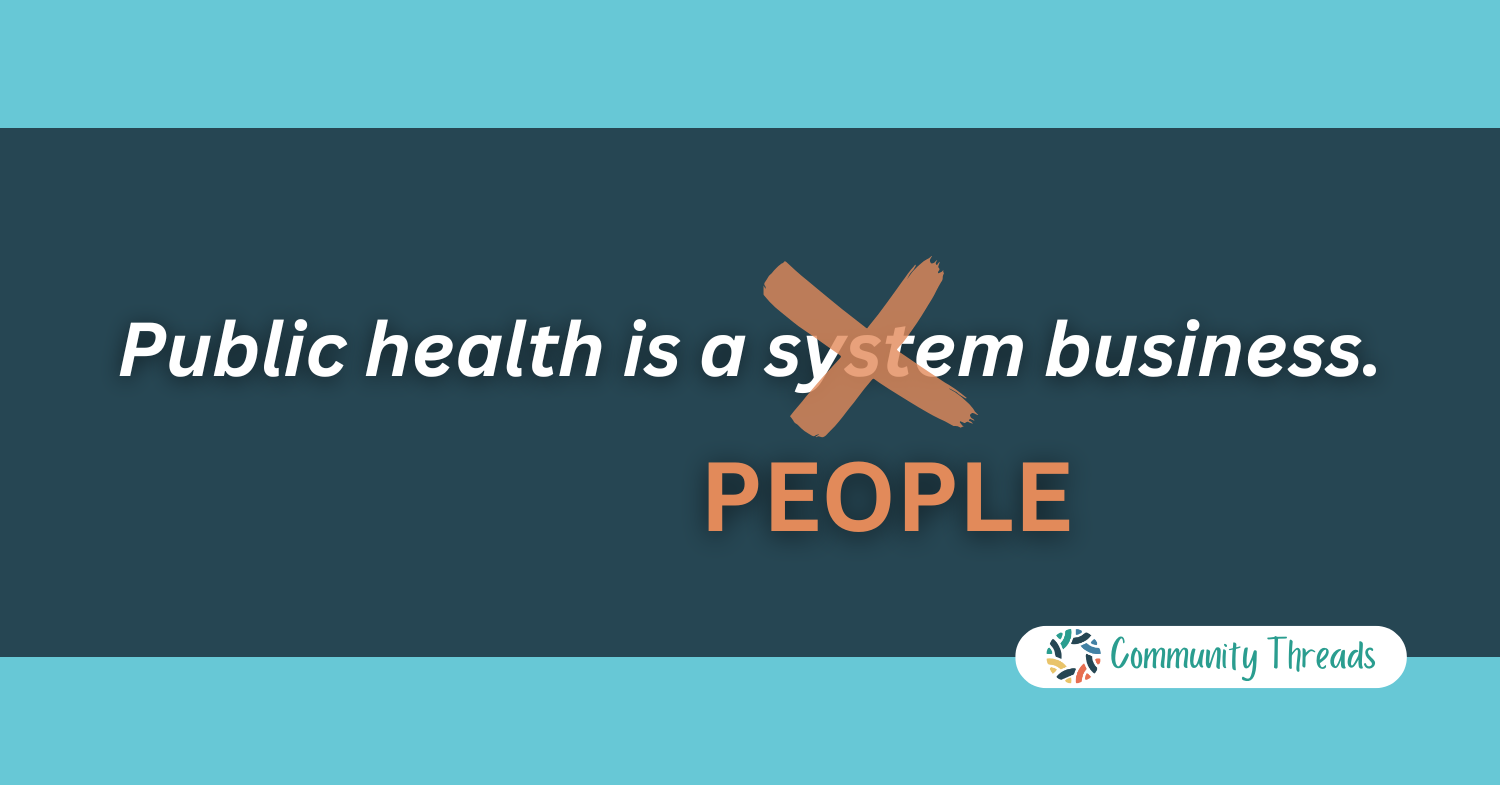
Public health isn't a systems business
It might not be something you’d expect me to say - me, someone who has drunk the “systems change” Kool-aid from way back in my undergrad engineering days throughout my public health training and into launching PoP Health (where our entire mission is to work with community coalitions to transform health through systems change).
Well, did that title catch you off guard?
It might not be something you’d expect me to say - me, someone who has drunk the “systems change” Kool-aid from way back in my undergrad engineering days throughout my public health training and into launching PoP Health (where our entire mission is to work with community coalitions to transform health through systems change).
But at a conference a few months ago, I heard someone say something that has really stuck with me because of how unexpected yet true it is: Public health is a people business cleverly disguised as a systems business.
Systems only move when PEOPLE move. So as leaders of community coalitions, we all need to build our PEOPLE strategy, not just our systems change strategy.
This is why we’re heading into 2026 with a new special series of Community Threads, focused on public health as a people business.
Because systems don’t change if people aren’t bought in.
Because systems don’t change if people aren’t champions for that change.
Because systems don’t change if we don’t plan for people moving into and out of leadership.
Because systems don’t change if we don’t treat people like people.
Because systems don’t change if we aren’t real with people.
We’ll be sharing more on each of these points over the next couple months. Please join the conversation, and forward this on to friends and colleagues - especially those who lead community coalitions! - who might be interested (if you got this email forwarded to you, you can subscribe to Community Threads here so you don’t miss getting this series straight to your inbox!).
What do you think? In what ways do you see public health as a people business? In what ways do you see public health as a systems business? Drop me a note and let me know!
Sign up to receive future newsletters directly in your inbox at www.pophealthllc.com!