
What is your coalition’s UNIQUE value add?
What’s your coalition’s unique value add in your community?
Here at PoP Health, we’ve been thinking a lot about why coalitions sometimes feel stuck in neutral (and the key to shifting gears).
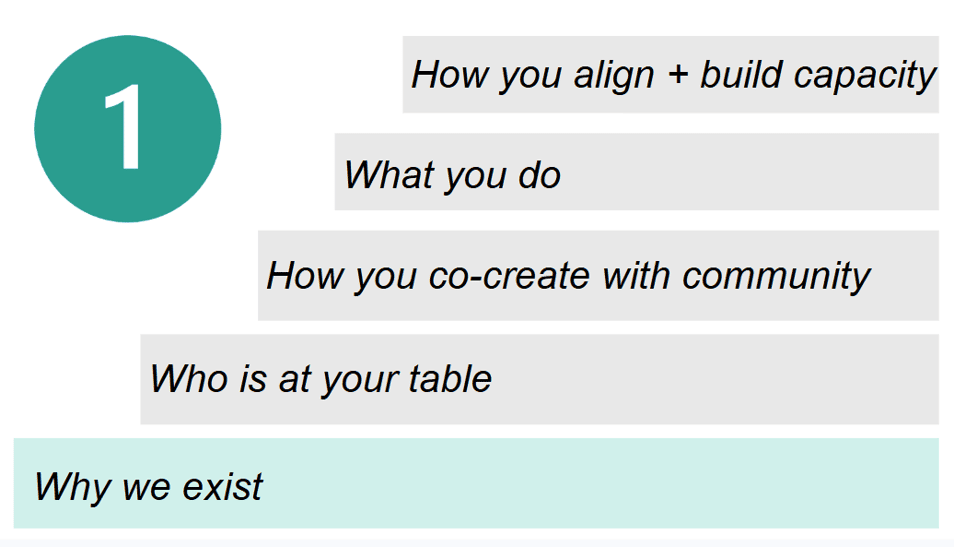
Our five steps to strengthen coalition foundations - the Coalition Core 5 - begins with shared clarity around why you exist as a coalition. More specifically, what is your coalition’s unique value add in your community.
What could you do to move the needle on health in your community that no other organization or group in your community is already doing or equipped to do?
Across the dozens of coalitions we’ve worked with over the years, here are the most common areas we see coalitions adding unique value:
Addressing systems-level challenges: Individual organizations in a community are naturally (and justifiably!) focused on their specific mission and the metrics they are held accountable to (whether by themselves, by their funders, or otherwise). They are rarely in a position to take the five steps back required to examine the system as a whole and all its players and what is or isn’t working, and think holistically and objectively about what changes are needed.
Enhancing coordination and collaboration: There are often way more resources and services and supports to address health and well-being in the community than one might expect. They’re just not coordinated in a way that maximizes impact. Sometimes this is about coordinating activities, sometimes it’s about collaborating to deliver or co-locate programs together, sometimes it’s about pooling resources, sometimes it’s about coming together around a shared narrative and messaging.
Engaging in collective action and advocacy: The value of a coalition table is that it’s many organizations and agencies and individuals coming together around a shared cause. What can you do together that you cannot accomplish alone? What kind of collective action and advocacy could help drive important systems changes in your community? And remember that advocacy is not only about governmental policy, you can also advocate for individual companies, agencies, and other organizations to do things differently (and that includes coalition members jointly committing to making changes within their organizations).
Building channels for community voice to drive decisions: Most of the time, the system isn’t engaging community members and it definitely isn’t responsive to them. Coalitions that prioritize bringing together community members and perspectives and then building the channels for their voice to drive decisions can have immense influence. These channels can focus on ensuring community voices drive decisions at the level of the coalition and its members but also more broadly at the level of local government, health systems, schools, businesses, and other community actors.
Here at PoP Health, we work with coalitions to help determine their unique value add and reflect it directly in their mission and theory of change.
For example, in our work with The DC Consortium for Mental Wellness and Behavioral Health in Schools (DC COMBS), we’ve helped the coalition develop a three-prong mission statement that really captures the things that no other space in the city was doing for school mental health that the coalition was uniquely poised to do:
Strengthen collaboration across research, practice, and policy spheres.
Create pathways for community voice to drive decisions.
Establish relationships with the actual decision-makers at the city and school levels
This mission now filters every decision the coalition makes.
It forms the basis for the coalition’s theory of change and how members are organized, as well as the coalition’s activities, outcomes, and plans for the future. The coalition just secured two years of funding using this three-pronged mission to organize the entire proposal – it provides so much clarity and a cohesive, compelling story.
Does your coalition have this level of clarity in what it’s here to do? Are you doing things that other organizations in your community already are or easily could be doing? Or are you focused on things that only your coalition can do in your community?
Think about these questions and drop me a reply with your thoughts.
I’d love to hear about both coalitions that feel really secure in their purpose and the value they’re adding in the community (and how you got there) and coalitions that are still figuring this out (and what you’re running into as you try to do this).
***
P.S. Sometimes it helps to just say the challenges out loud. If you're looking for a fresh perspective on what’s next for your health coalition, you can find my calendar here.
And if you're looking to share this newsletter with another coalition member or colleague, here's the link to subscribe.
***
Sign up to receive future newsletters directly in your inbox at www.pophealthllc.com/newsletter.