

What is your coalition’s UNIQUE value add?
What’s your coalition’s unique value add in your community?
Here at PoP Health, we’ve been thinking a lot about why coalitions sometimes feel stuck in neutral (and the key to shifting gears).
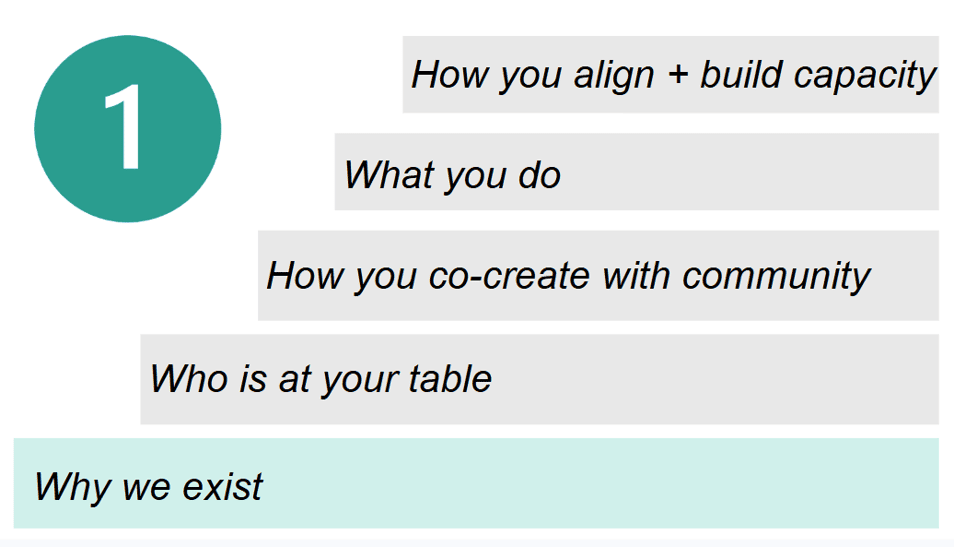
Our five steps to strengthen coalition foundations - the Coalition Core 5 - begins with shared clarity around why you exist as a coalition. More specifically, what is your coalition’s unique value add in your community.
What’s your coalition’s unique value add in your community?
Here at PoP Health, we’ve been thinking a lot about why coalitions sometimes feel stuck in neutral (and the key to shifting gears).
Our five steps to strengthen coalition foundations - the Coalition Core 5 - begins with shared clarity around why you exist as a coalition. More specifically, what is your coalition’s unique value add in your community.
What could you do to move the needle on health in your community that no other organization or group in your community is already doing or equipped to do?
Across the dozens of coalitions we’ve worked with over the years, here are the most common areas we see coalitions adding unique value:
Addressing systems-level challenges: Individual organizations in a community are naturally (and justifiably!) focused on their specific mission and the metrics they are held accountable to (whether by themselves, by their funders, or otherwise). They are rarely in a position to take the five steps back required to examine the system as a whole and all its players and what is or isn’t working, and think holistically and objectively about what changes are needed.
Enhancing coordination and collaboration: There are often way more resources and services and supports to address health and well-being in the community than one might expect. They’re just not coordinated in a way that maximizes impact. Sometimes this is about coordinating activities, sometimes it’s about collaborating to deliver or co-locate programs together, sometimes it’s about pooling resources, sometimes it’s about coming together around a shared narrative and messaging.
Engaging in collective action and advocacy: The value of a coalition table is that it’s many organizations and agencies and individuals coming together around a shared cause. What can you do together that you cannot accomplish alone? What kind of collective action and advocacy could help drive important systems changes in your community? And remember that advocacy is not only about governmental policy, you can also advocate for individual companies, agencies, and other organizations to do things differently (and that includes coalition members jointly committing to making changes within their organizations).
Building channels for community voice to drive decisions: Most of the time, the system isn’t engaging community members and it definitely isn’t responsive to them. Coalitions that prioritize bringing together community members and perspectives and then building the channels for their voice to drive decisions can have immense influence. These channels can focus on ensuring community voices drive decisions at the level of the coalition and its members but also more broadly at the level of local government, health systems, schools, businesses, and other community actors.
Here at PoP Health, we work with coalitions to help determine their unique value add and reflect it directly in their mission and theory of change.
For example, in our work with The DC Consortium for Mental Wellness and Behavioral Health in Schools (DC COMBS), we’ve helped the coalition develop a three-prong mission statement that really captures the things that no other space in the city was doing for school mental health that the coalition was uniquely poised to do:
Strengthen collaboration across research, practice, and policy spheres.
Create pathways for community voice to drive decisions.
Establish relationships with the actual decision-makers at the city and school levels
This mission now filters every decision the coalition makes.
It forms the basis for the coalition’s theory of change and how members are organized, as well as the coalition’s activities, outcomes, and plans for the future. The coalition just secured two years of funding using this three-pronged mission to organize the entire proposal – it provides so much clarity and a cohesive, compelling story.
Does your coalition have this level of clarity in what it’s here to do? Are you doing things that other organizations in your community already are or easily could be doing? Or are you focused on things that only your coalition can do in your community?
Think about these questions and drop me a reply with your thoughts.
I’d love to hear about both coalitions that feel really secure in their purpose and the value they’re adding in the community (and how you got there) and coalitions that are still figuring this out (and what you’re running into as you try to do this).
***
P.S. Sometimes it helps to just say the challenges out loud. If you're looking for a fresh perspective on what’s next for your health coalition, you can find my calendar here.
And if you're looking to share this newsletter with another coalition member or colleague, here's the link to subscribe.
***
Sign up to receive future newsletters directly in your inbox at www.pophealthllc.com/newsletter.
Why most coalitions feel stuck in neutral (and the key to shifting gears)
For the last few months, we’ve been talking about how public health isn’t actually a systems business. It’s a people business.
For the last few months, we’ve been talking about how public health isn’t actually a systems business. It’s a people business.
If you missed our series on this, or are just joining us (welcome!), definitely circle back and check it out. We talked about why I think public health is a people business (despite being a HUGE believer in systems change), the one thing it all comes down to, why you need champions, the biggest threat to sustaining your coalition’s work, and why the key to your coalition’s success is to be human (yes, even in - especially in - a world obsessed with AI).
Health coalitions and other partnerships are a prime example of public health as a people business. Yes, our aim is to change systems (not people), but to get to systems change, we have to inspire, coordinate, and mobilize our coalition and community members to act, and we have to listen to and learn from them along the way.
If you’ve ever felt STUCK in neutral in your coalition - stuck in the “ sit and meet with people” phase, stuck in the “let’s do another needs assessment” phase, stuck in the “we have a strategic plan but it’s sitting on a shelf phase” - then the key to shifting gears has to do with building a foundation that recognizes this PEOPLE component of the work.
Who you have at the table, how you listen to and co-create with them, how you inspire them, how you decide what to do together, how you build their capacity - all of this matters deeply.
Without it, you lack engagement, you lose momentum, you remain stuck in neutral.
With it, you build the foundation you need to shift gears and get to meaningful action and lasting impact.
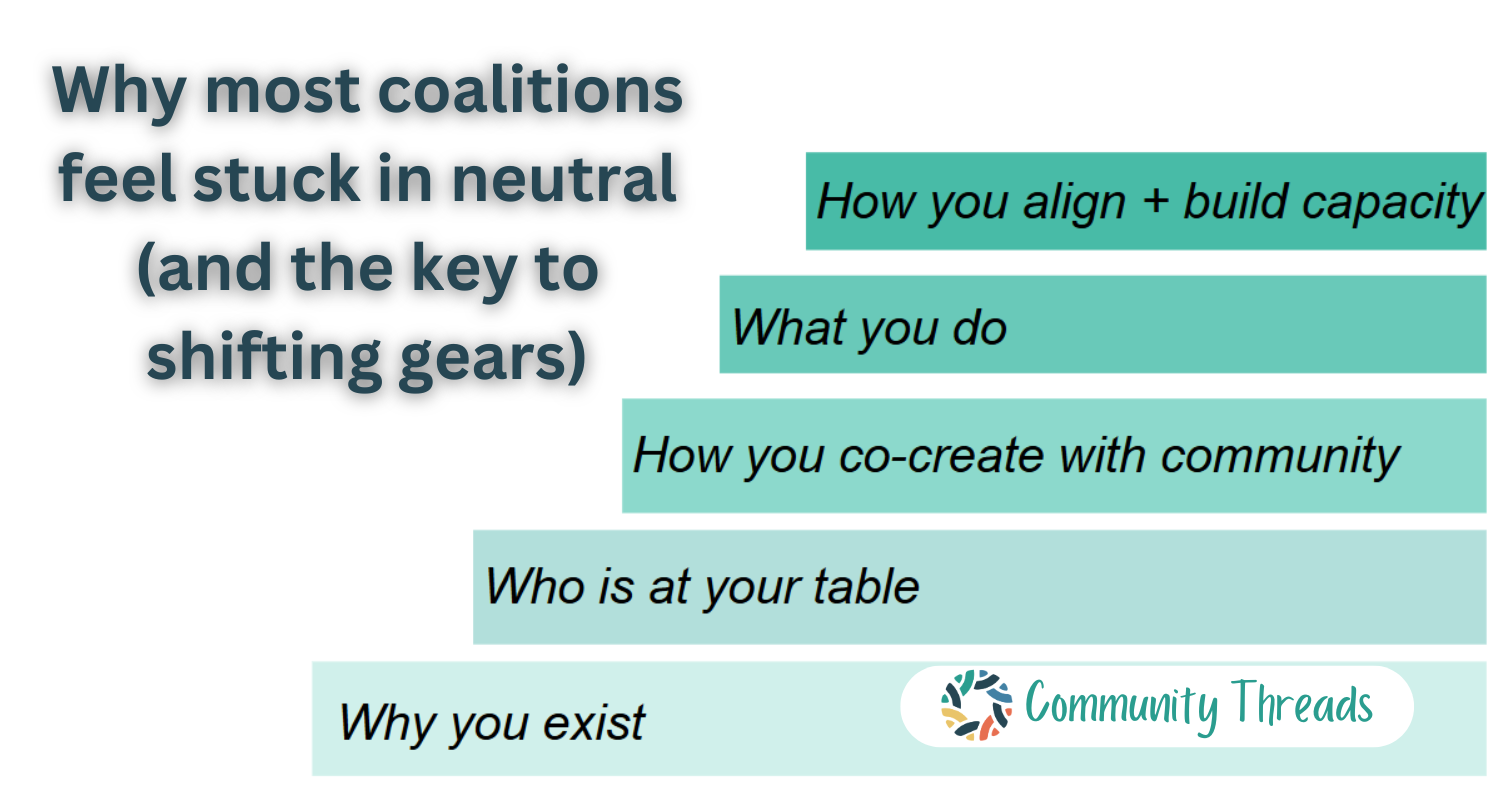
I recently gave a talk at the National Network of Public Health Institutes conference where I shared the steps involved in this foundation. We call it the Coalition Core 5 and it’s the difference between a coalition feeling stuck and feeling like a superhero, between admiring the problem and solving it, between feeling stalled and having real momentum and impact.
Here are the five steps:
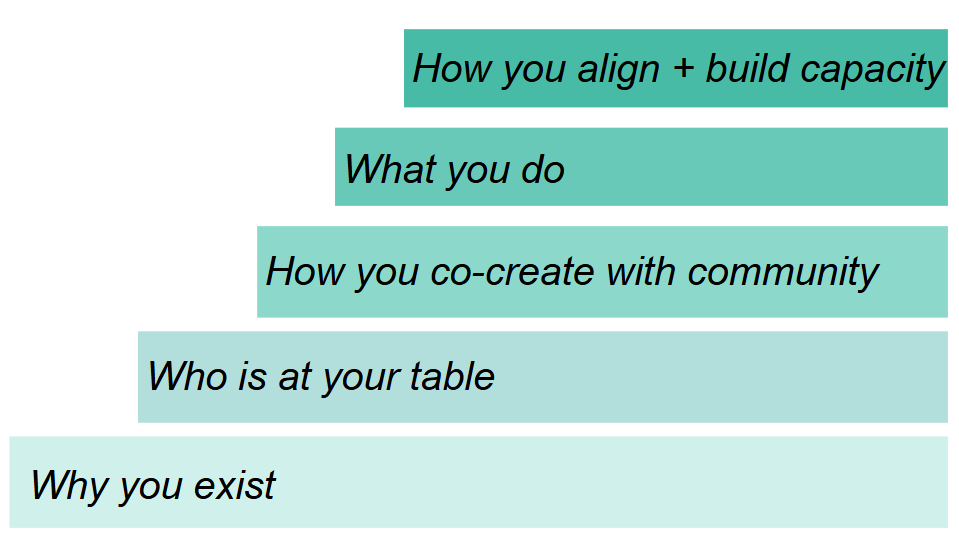
Over the next several issues, we’ll unpack each of these steps, sharing how we’ve helped our partners use them to shift from neutral into high gear.
But first, I’d love to hear your initial reaction. Which of these steps sounds most promising to you in terms of unlocking greater engagement and impact in your coalition? Drop me a note and let me know!
***
P.S. Sometimes it helps to just say the challenges out loud. If you're looking for a fresh perspective on what’s next for your health coalition, you can find my calendar here.
And if you're looking to share this newsletter with another coalition member or colleague, here's the link to subscribe.
***
Sign up to receive future newsletters directly in your inbox at www.pophealthllc.com/newsletter.
In a world of bots, be a HUMAN - it’s key to your coalition’s success
As we’re highlighting through this series, public health is, at its core, a people business.
So, naturally, one key piece of advice for health coalition leaders to keep in mind: Be a human.
In an era of artificial intelligence and soulless corporations, there’s something to be said for simply being human.
As we’re highlighting through this series, public health is, at its core, a people business.
So, naturally, one key piece of advice for health coalition leaders to keep in mind: Be a human.
In an era of artificial intelligence and soulless corporations, there’s something to be said for simply being human.
And even for those of us who are devoted to transforming health and well-being in our communities, it’s easy to lose sight of the ways in which being human makes our work stronger.
So we’re going to shine a light on a few of those ways. Here’s how you can lead with your humanity:
1. Lead with YOUR story.
Don’t just embrace your humanity, lead with it. Get personal.
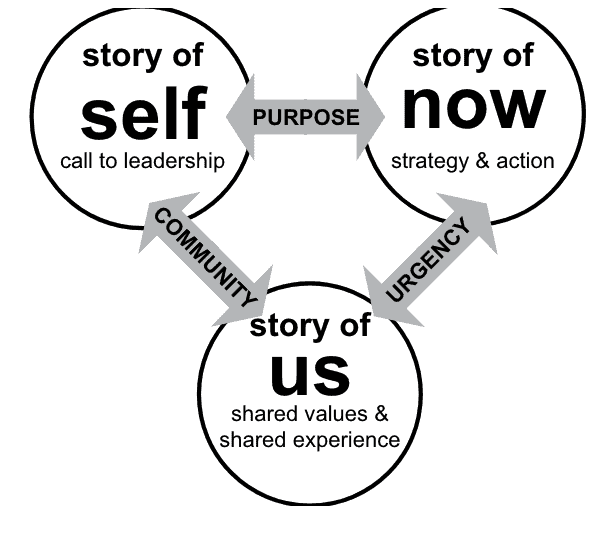
We love Marshall Ganz’s Public Narrative framework (ever since I first learned this from him in a grad school class, it completely reshaped the way I approach storytelling).
Instead of a dry bio, frame your communication through three lenses:
The Story of Self: Why are you called to this work? What specific experiences shaped your values?
The Story of Us: What shared values and experiences connect your coalition members? Your community members?
The Story of Now: What is the urgent challenge we face, and what is the specific path forward?
2. Embrace JOY.
Yes, things are heavy in the world and in our country right now. Yes, public health has been attacked right and left. And yet - we cannot forget the human desire for JOY.
If your coalition meetings feel like a chore, people will eventually stop showing up. Find ways to infuse delight into the process - a funny icebreaker, a celebration of small wins, space for connection. If people are having fun, they’ll stay in the fight - and so will you.
3. APOLOGIZE.
We are human. We’re going to make mistakes. In a professional world that sees admitting fault as a liability, be the person who owns it.
When you make a mistake, acknowledge it. Apologize. Rewind and/or repair. When you fail to acknowledge a mistake, you lose credibility. When you own it and take action to make things better, you gain trust.
4. Prioritize COMMUNITY.
“Community is the medicine.” Every single line of this convocation speech Lily Singh gave is so on point. She says: “Everything is better when it happens alongside people you love. Though the world is trying to convince you otherwise, we are all wired for togetherness…Human connection is the entire point.”
Ok, take a look back at that list. Can AI meaningfully do these things? Can a soulless corporation?
I don't think so.
So don’t shy away from being YOU - flawed, excitable, vulnerable, real, HUMAN.
Transforming community health is a people business. The only way to succeed is to be human.
What do you think? How are you bringing your human self to your coalition meetings this week?
***
Sometimes it helps to just say the challenges out loud. If you're looking for a fresh perspective on what’s next for your health coalition, you can find my calendar here.
Sign up to receive future newsletters directly in your inbox at www.pophealthllc.com/newsletter.
The “rockstar” trap - the biggest threat to sustaining your coalition’s work
My first full time public health job was at a state health department, working with schools to implement evidence based youth violence prevention programs. Principals and school counselors were often the rockstars behind this work - until they weren’t.
My first full time public health job was at a state health department, working with schools to implement evidence based youth violence prevention programs. Principals and school counselors were often the rockstars behind this work - until they weren’t.
I repeatedly heard counselors say: “The program was a huge success…and then our principal left.”
Then I heard principals say: “The program was a huge success…and then our school counselor left.”
Here's the thing: No matter how brilliant your program or policy is, if it relies on the passion or knowhow of a single person, it’s designed to fail.
The “Rockstar” Trap
In health coalition work, we often rely on "rockstars,” those high-energy leaders and members who carry the institutional memory in their heads and the key relationships in their personal cell phones.
But hoping these rockstars stick around forever isn’t a strategy.
People get promoted. They get sick. They move. Especially in a volunteer-heavy environment like many coalitions are, turnover isn't just possible, it’s inevitable.
If your coalition's success depends on a specific person sticking around forever, you aren't building a movement to transform health in your community, you're hosting a temporary project.
To sustain your coalition’s work and impact, we have to go from relying on rockstars to building systems for succession.
What does this look like in practice? Let’s get into it.
4 Strategies for Succession Planning
Build a “Leadership Bench”. The first step here is to broaden buy-in and foster champions, as discussed earlier in this newsletter series - this way, the passion to keep the work going and the knowledge of how to do the work doesn't just live in one person AND you have a bench of people who are more ready to take on leadership roles when the time comes. To really build that bench though, you need to pair those broader efforts with a more focused succession planning approach. This brief (from the Association of State and Territorial Health Officials (ASTHO)) on demystifying succession planning in public health agencies can be a helpful place to start. While not specific to coalitions, many of the concepts are still relevant! They define succession planning as “a developmental strategy that equips staff with mentorship and training to grow into a future role when it becomes available. Rather than naming a backup, succession planning fosters a transparent pipeline for growth into a vertical or lateral position change. Stretch-opportunities and cross-training drive the preparation process.”
Kill the “Internal Rolodex”. Track and transition relationships, just as you would specific activities. Work moves at the speed of trust, and that is especially true when we’re talking about the work of community coalitions. So many relationships are needed to move the work forward - relationships with local policymakers and journalists, school system and faith-based leaders, community leaders and advocates. And if one person’s relationships live only in their internal rolodex, when they leave, those relationships vanish, and the work slows. Instead, track relationships in your project management system (which might just be a spreadsheet - that works!), along with pertinent details and notes, and when someone is leaving the coalition, make sure their relationships are transitioned too, not just their duties. Ideally, that can happen with a warm hand-off during a joint meeting (especially for really important relationships) but even in the absence of that, an email introduction or a link to where relationships are tracked in the project management system can go a long way.
Standardize the “Brain Dump”. Establish systems that ensure institutional history and knowledge are captured - ideally in real time - so that this information doesn't disappear when a person leaves. So often, our most passionate and effective leaders and members hold so much in their heads, and without the systems to document and share it, this vital information walks out the door when they do. Establish ‘Standard Operating Procedure’ (SOP) documentation processes, have a clear file organization system in a shared drive, use a project management tool to outline and track workplans, and make sure multiple coalition members are trained to know where to find these things, understand how they are set up, and are able to update them as needed.
Templatize the Transition: Have templates for transition documents so the person leaving has a clear roadmap of what to brain dump and document. The more of this that can happen in real time (as noted in the point above), the better, but there will always be loose ends. Make sure you have a place to capture them.
As we’re highlighting through this series, public health is a PEOPLE business.
But for our work to thrive, it cannot be dependent on the same people forever.
Whether it's the leader whose buy-in is a prerequisite for the work to move forward or the ground-level staff making it happen, plan for succession so you can sustain your work, maintain momentum, and continue to have impact in your community.
It’s the only to make sure that even when your rockstars (or you!) leave, the mission stays.
I'd love to hear from you - which of these strategies is your coalition or organization using well and where might you need to focus more?
Sign up to receive future newsletters directly in your inbox at www.pophealthllc.com/newsletter.
Why you need champions (not the Super Bowl kind)
How would you define a champion?
You might think about a Super Bowl or Olympic champion - that would be dictionary definition #1 (“someone or something, especially a person or animal, that has beaten all other competitors in a competition”).
But I’m thinking about dictionary definition #2: “a person who enthusiastically supports, defends, or fights for a person, belief, right, or principle”
How would you define a champion?
You might think about a Super Bowl or Olympic champion - that would be dictionary definition #1 (“someone or something, especially a person or animal, that has beaten all other competitors in a competition”).
But I’m thinking about dictionary definition #2: “a person who enthusiastically supports, defends, or fights for a person, belief, right, or principle”
We saw Bad Bunny champion community and love and unity during this year’s Super Bowl halftime show, not to mention Puerto Rico and Spanish and Latino heritage and culture.
We need those kinds of champions in this country right now.
And we need champions in our own coalitions and communities too.
Here’s the thing, as is the crux of this series of our newsletter, systems only change when people change.
And you can’t get people to change at scale without champions - people within their organizations and communities who proactively advocate for the change, support the change, model the change.
One of my favorite examples of this comes from our work in DC public schools. DC public schools launched a whole child focused initiative a few years ago, and they intentionally identified “champions” - teachers and staff in schools across the district who were going to champion this whole child work and be the early adopters, the vocal advocates, the guides, the role models.
When someone in a school saw a fellow teacher in their same building applying a new practice and sharing how much it helped them and their students, they were far more likely to want to try the practice themselves. And when they ran into challenges, they could run down the hall and get some advice.
Anytime your coalition is trying to shift a system, think about the people who need to be a part of the shift and who your champions are or could be. Nurturing those champions is a vital element of getting to the change you seek.
The idea of champions applies internally within coalitions too. Does it feel like your coalition is undervaluing something of importance (whether that be community voice or strategic planning or collective action or evaluation and learning or something else)? Who on your coalition already believes in the value of that thing and can you nurture them to be a champion and voice for that thing so other coalition members get bought in too?
Who are your champions - in your coalition, in your organization, in your community? What have you done (or could you do) to foster them as champions and accelerate the people change you need to get to systems change? Please reply and share your thoughts with me!
Sign up to receive future newsletters directly in your inbox at www.pophealthllc.com/newsletter.
It all comes down to one thing: buy-in
Turns out the answer to everything isn’t 42. Or 6-7 for that matter (sorry, I couldn’t help myself!).
It’s BUY IN.
Turns out the answer to everything isn’t 42. Or 6-7 for that matter (sorry, I couldn’t help myself!).
It’s BUY IN.
Okay, maybe not the answer to everything but in the world of coalitions, it IS the answer to a lot of questions:
Q: How do we get more things done?
A: Buy-in.
Q: How do we get coalition members to participate meaningfully in our meetings?
A: Buy-in.
Q: How do we get local policymakers to make the changes our community needs?
A: Buy-in.
Q: How do we get new leadership to carry on the work we’ve started?
A: Buy-in.
Q: How do we get an organization’s staff to take action on the things our coalition has identified as helpful?
A: Buy-in.
As we noted earlier this month and as is the focus of this series, public health is a PEOPLE business. And for any of the work to move forward, PEOPLE have to be bought in to the work.
What people? It’s a long list: coalition members, local policymakers, community agencies and organizations (their leaders and their staff), community members themselves.
Which of these people really need to be bought in to a specific aspect of the work will vary based on their level of involvement and the stage of the work, but at some point, each of their buy-in will be important to advancing the work of your coalition.
So how do you get buy-in? Here are four steps to follow:
Whoever you need buy-in from, understand their ‘why’ - What do they most need and want? What motivates them and inspires them? What keeps them going? What keeps them up at night? What are their priorities and values? What metrics are they held accountable to?
Frame what you’re seeking in those terms - I’m not saying pander or change your goals (although sometimes, changing goals makes sense based on the input you get!). Rather, try to frame what you’re seeking in terms that align with their ‘why’ and understand what language to let go of and what language to amplify.
Bring them along for the ride - It’s hard to feel bought in to something if it’s been shaped without your input and now being forced on you. Understand who you need buy-in from and bring them along from the get-go. Involve them in shaping the work (This doesn’t mean you act on everything they say! But it’s important to hear them and be open to reshaping the work in ways that balance your ultimate goals and the needs and realities of those you need buy-in from to accomplish those goals).
Tell the story of how what you’re seeking is going to help them - How does what you’re seeking align with what they need and want, take something off their plate, help them achieve a goal, alleviate one of their pain points, or strengthen their impact?
Building buy-in is one of the most important roles of coalition leadership. I’d love to hear more about your experiences building buy-in. Whose buy in do you need that has been hardest to get? Is there a particular approach or conversation that has really worked for you in gaining buy-in? Drop me a note and let me know!
Sign up to receive future newsletters directly in your inbox at www.pophealthllc.com/newsletter.
Public health isn't a systems business
It might not be something you’d expect me to say - me, someone who has drunk the “systems change” Kool-aid from way back in my undergrad engineering days throughout my public health training and into launching PoP Health (where our entire mission is to work with community coalitions to transform health through systems change).
Well, did that title catch you off guard?
It might not be something you’d expect me to say - me, someone who has drunk the “systems change” Kool-aid from way back in my undergrad engineering days throughout my public health training and into launching PoP Health (where our entire mission is to work with community coalitions to transform health through systems change).
But at a conference a few months ago, I heard someone say something that has really stuck with me because of how unexpected yet true it is: Public health is a people business cleverly disguised as a systems business.
Systems only move when PEOPLE move. So as leaders of community coalitions, we all need to build our PEOPLE strategy, not just our systems change strategy.
This is why we’re heading into 2026 with a new special series of Community Threads, focused on public health as a people business.
Because systems don’t change if people aren’t bought in.
Because systems don’t change if people aren’t champions for that change.
Because systems don’t change if we don’t plan for people moving into and out of leadership.
Because systems don’t change if we don’t treat people like people.
Because systems don’t change if we aren’t real with people.
We’ll be sharing more on each of these points over the next couple months. Please join the conversation, and forward this on to friends and colleagues - especially those who lead community coalitions! - who might be interested (if you got this email forwarded to you, you can subscribe to Community Threads here so you don’t miss getting this series straight to your inbox!).
What do you think? In what ways do you see public health as a people business? In what ways do you see public health as a systems business? Drop me a note and let me know!
Sign up to receive future newsletters directly in your inbox at www.pophealthllc.com!
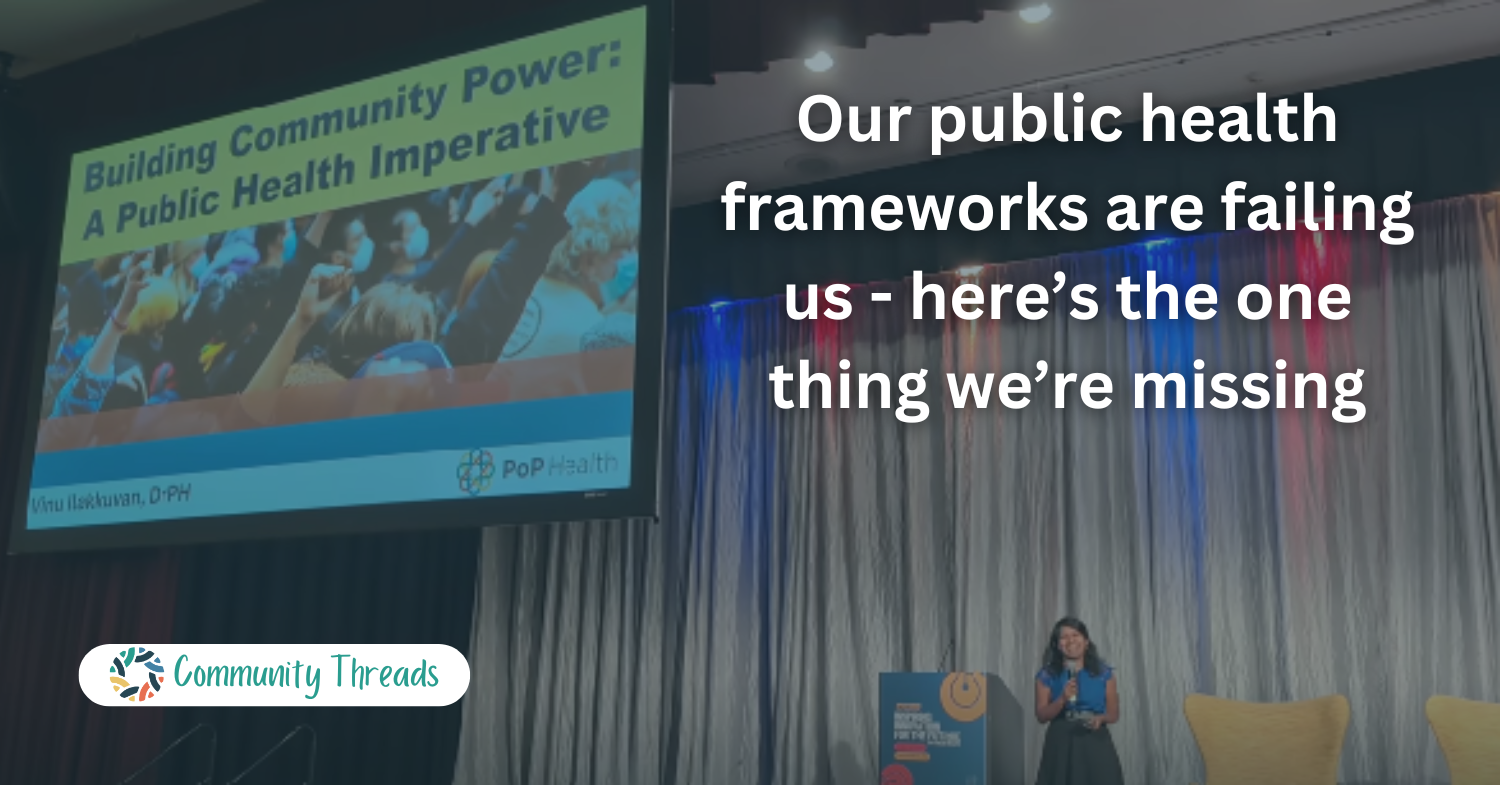
Our public health frameworks are failing us - here’s the one thing we’re missing
Our public health frameworks are failing us.
They're true. AND they're failing us.
Let me explain why.
I had the pleasure of giving a Lightning Talk at the National Network of Public Health Institutes Open Forum conference in Pittsburgh earlier this month (it was a balm to the soul to be in the company of fellow community-based public health practitioners!)
Our public health frameworks are failing us.
They're true. AND they're failing us.
Let me explain why.
I had the pleasure of giving a Lightning Talk at the National Network of Public Health Institutes Open Forum conference in Pittsburgh earlier this month (it was a balm to the soul to be in the company of fellow community-based public health practitioners!)
Here’s how and why our public health frameworks are failing us, the one thing we're missing, and what we need instead:
Now, let me break down each of these ways to begin treating building community power as a public health imperative.
Way #1: Cultivating community connection
The status quo: What our former surgeon general Vivek Murthy calls a loneliness epidemic. We have an individualistic lens, an obsession with self-care and self-help.
What we need instead: A sense of COMMUNITY. Ways to work, play and simply be together. Third spaces to hang out. Mutual aid. Land use planning that prioritizes connections. Group care and group help. What Priya Parker calls Group Life.
An on the ground example (in Pittsburgh, where NNPHI's conference took place!) - Pittsburgh's wedding cookie table!
A public health example - community coalitions of course!
Ways to cultivate community connection in YOUR work: look for low-lift opportunities + think strategically about convening (What could you change if you teamed up with others that feels impossible alone? Bring folks together around a specific goal.)
Way #2: Strengthening the foundations for civic organizing
The status quo: Our civic muscles have atrophied. Direct involvement in local politics, union membership, and civic activity beyond voting have all declined.
What we need instead: Stronger foundations for civic organizing that can advance health-transforming policies. This requires: community connection as the foundation for effective organizing; strong local news to know what's happening and hold officials accountable; strong community organizing infrastructure
An on the ground example: Pittsburgh's "Our Water" Campaign, led by Pittsburgh United.
A public health example: The Public Health for Community Power Coalition (whose members include Health in Partnership (HIP), Public Health Institute, Prevention Institute, ChangeLab Solutions, Berkeley Media Studies Group, and others)
Ways to strengthen the foundations for civic organizing through YOUR work: For organizing/advocacy groups - long-term, consistent organizing across topics is key. For those with limits on direct advocacy - there's still so much you can do! Convene people and make intros across your government and community partners, and build storytelling and other skills among community members that make effective organizing more likely.
Way #3: Fostering narrative change
The status quo: Individualistic, "blame myself and shame on you" narratives about what shapes our health.
What we need instead: a narrative recognizing what lies further upstream and the role of community power. We need a new narrative – that gets explicit about the political and corporate forces shaping the policies and systems that shape our health. And then, beyond better messaging, we need actual narrative infrastructure to construct and sustain narratives over time, through things like community partnerships, research, legal advocacy, and institutions of meaning-making like schools, mass media, and museums.
An on the ground example: Healthy Start’s infant health equity coalition in Pittsburgh, who we here at PoP Health have been so grateful to work with over the years! They’ve crafted a community-driven narrative by funding local organizations to gather member stories, hosting town halls featuring community stories, and training community members as health advocates who speak to systemic issues.
A public health example: My new project, GASLIT (Gaslit by Corporations / Ignited by Community). I launched GASLIT to explicitly name corporate power as a root cause of public health harms and center community power in the fight for our health, planet, and future. Please sign up for the GASLIT newsletter if you’re interested in receiving action steps you and your neighbors can take to ignite change, stories of communities reclaiming their power, and investigations into corporate gaslighting.
The foundations for fostering narrative change in YOUR work: Think about the narrative itself: Revisit how you talk about root causes of health. Are you going upstream enough? And build narrative infrastructure: Build community members' skills to tell their stories, create spaces for them to speak directly to decisionmakers. Engage with institutions of meaning-making to shape narratives about health.
So, what's next?
Which of these ways fits in most directly with your work?
What steps are you hoping to take next?
Drop me a line and let me know.
And if I can help, whether that's through a keynote talk on community power as a public health imperative; training, tools, and coaching for your coalition, or simply answering a question via email, please reach out!
Sign up to receive future newsletters directly in your inbox at www.pophealthllc.com!
4 questions on the path to action
I’ve been sitting with some hard truths lately.
Systems are complex. Dynamic. Interconnected.
Working together in a coalition to change those systems is hard. Slow. Complicated.
That’s just the reality of what we’re trying to do.
I’ve been sitting with some hard truths lately.
Systems are complex. Dynamic. Interconnected.
Working together in a coalition to change those systems is hard. Slow. Complicated.
That’s just the reality of what we’re trying to do.
So for anyone else who’s feeling stuck, but not ready to give up (I’m definitely not!) - I thought I’d share some simple questions I go back to when I’m trying to dig myself out of the ditch and get us back on a path to action. (And let me be clear, I mean the questions are simple - the process of answering them and the answers themselves are unlikely to be.)
For whatever system you’re trying to change:
What's working? What are the strategies, models, and examples that are working that we can learn from?
What’s not working? What are the gaps, challenges, and complaints we need to address?
What should be tried next? What specifically should be continued or started, changed or stopped?
Who has the authority/capacity/expertise to execute those next steps? And what might we or our partners or our communities be able to do to influence, equip, or support those people to take those steps?
I hope these questions can help you climb back onto the path to action if you’ve fallen off, or keep you going on it if you’re still making your way.
And if you're looking for some extra support on that front, we're here to help! PoP Health's capacity building packages for community coalitions and their partners include training workshops, tools, and templates that will help you walk through the systems change questions I've shared above in a way that's driven by both community and coalition member perspectives. Plus, we'll support you with ongoing coaching and technical assistance that'll make sure you take those actions to the finish line. Here’s a brief summary, email me if you want to chat further!
Sign up to receive future newsletters directly in your inbox at www.pophealthllc.com!
4 options in the face of collapsing systems
If you, like me, are distressed about what’s happening at the CDC, what’s happening around vaccines, what’s been happening with public health grants and research being terminated, and more - I see you.
If you, like me, are distressed about what’s happening at the CDC, what’s happening around vaccines, what’s been happening with public health grants and research being terminated, and more - I see you.
I shared my thoughts in the wake of the shots fired at the CDC here, and even just since then, we’ve seen top CDC officials resign after their director was ousted.
When systems are collapsing around us, it can be even harder than usual to answer the question of: what next? What should we DO? Not to mention, what CAN we do, especially if we are grappling with fewer resources and an uncertain future?
While I don’t have magic answers, I do have some options that might be helpful to consider. I found this piece on grappling with systems collapse very relevant to the community coalitions we work with here at PoP Health, who are focused on systems change - and thus especially impacted by systems collapse (hat tip to I2I, which drew my attention to this piece in their newsletter).
Let me summarize the options the authors of this piece lay out for what impact might look like in collapsing systems.
We can:
Protect. This model “builds and leverages power to counteract the worst harms, strengthen community resilience, and preserve values of care and belonging to carry people through crisis.” E.g., mutual aid
Block. “If a collapsing system seems likely to give way to an even more dysfunctional or inequitable alternative, then the blocking impact model may be an appropriate response. This model can slow down both the pace of collapse and the emergence of worse alternatives.” E.g., providing know-your-rights training.
Disrupt. This model “achieves impact by embracing the fact that as the legacy system deteriorates it is possible to shed the constraints, rules, and norms that do not serve the social sector.” E.g., boycotts and strikes.
Create. “With the system awash in uncertainty, there is an opportunity—even a responsibility— to pursue truly transformative impact. This means exploring the larger context in which the system sits….What ideas or projects can be tested or nurtured? Which leaders have been marginalized by existing systems, but…are uniquely positioned to step up in this moment?” E.g., participatory governance.
The full article adds a lot of important nuance about the conditions you need to maintain to push forth with each of these options.
Three bonus questions they ask at the end of their piece, and I’ll now ask you:
What can we let go of, what do we want to carry with us, and what do we want to build?
Here at PoP Health, we’re:
letting go of being the best (and being this instead),
carrying with us all we’ve learned from coalitions on the ground doing the work, and
seeking to build the capacity of more coalitions to translate their vision and resources into tangible action.
→ On that front, PoP Health is now offering capacity building packages for community coalitions working on systems change (training workshops, tools and templates that will save you time and get you to action much more quickly, along with ongoing coaching and technical assistance that'll make sure you take those actions to the finish line). Here’s a brief summary, email me if you want to chat further!
For me personally, I’m:
letting go of the desire to see results quickly (because the fight for our future, our health, our planet, our democracy - it’s all long-term and multigenerational),
seeking to help build community power, in my own community and beyond.
→ On that front, check out my new project GASLIT by Corporations/IGNITED by Community, at www.gaslitbycorporations.com.
What about you? What are you letting go of, carrying with you, and wanting to build? Drop me a note and let me know.
As the authors of this piece on systems collapse note, “this moment requires us to engage in repair and reimagination”.
Sign up to receive future newsletters directly in your inbox at www.pophealthllc.com!